Your Hair Isn’t “Gone” —
It May Just Be Dormant
Many people try shampoos, oils, and supplements without seeing visible density improvements. The issue often isn’t what you apply — it’s whether your scalp environment is being properly supported.
- ✔ Designed for consistent scalp stimulation sessions
- ✔ Hands-free use while relaxing or working
- ✔ Easy to add into your weekly routine
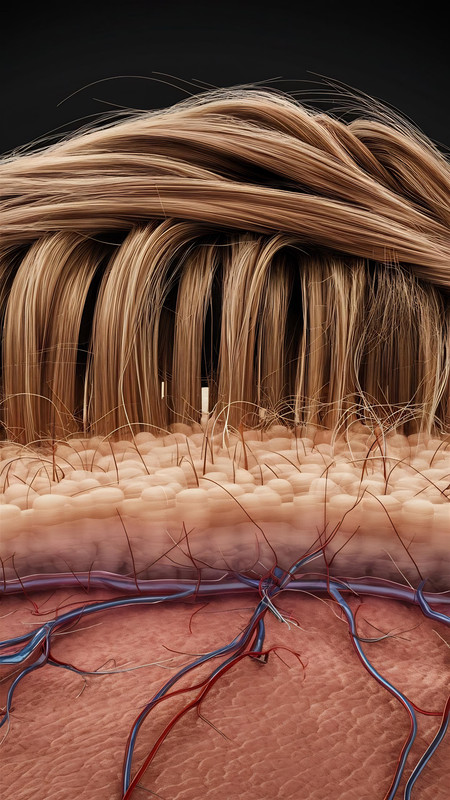
How This Helps “Wake Up” Dormant Follicles (So hair can look visibly fuller over time)
If you’re seeing more scalp in photos, a widening part, or thinning at the crown, it’s rarely because you “didn’t try hard enough.” In many cases, follicles slowly drift into a low-activity state when the scalp environment stops supporting strong growth.
That’s why switching shampoos, adding oils, or taking random supplements often feels like nothing changes — those approaches don’t deliver consistent, localized stimulation where follicles actually operate.
- ✔ Helps promote healthier-looking scalp circulation
- ✔ Supports cellular energy where follicles “decide” to grow
- ✔ Encourages a more supportive environment for visible density
In simple terms: it helps your scalp send the “green light” follicles have been missing.
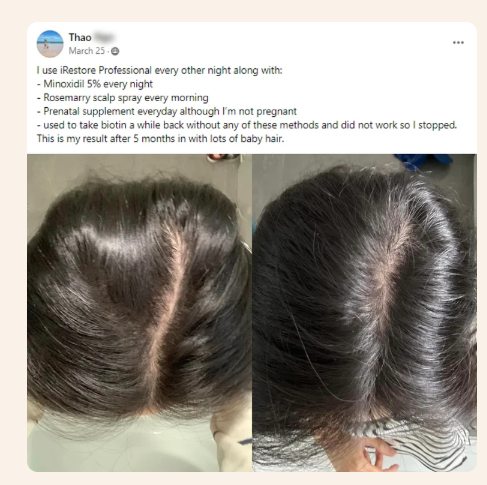
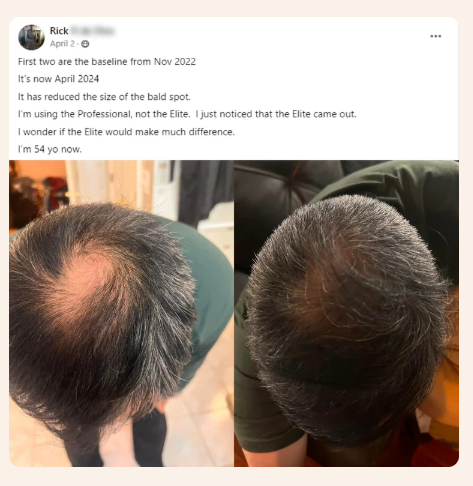
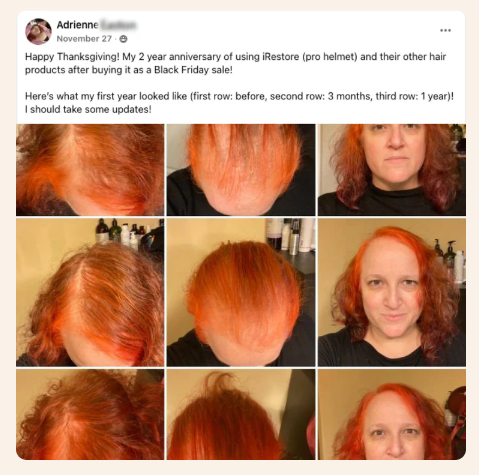
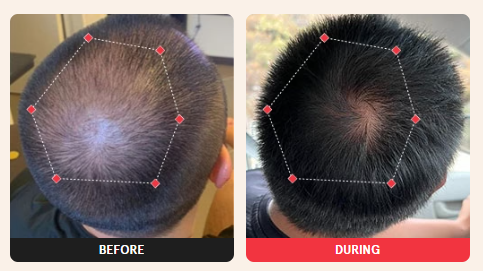
Real Progress You Can See
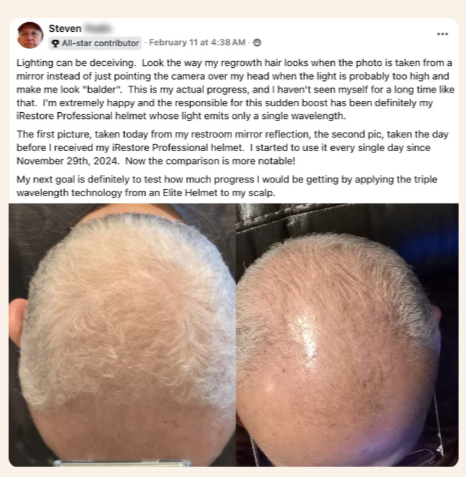
When the scalp environment is consistently supported, many users begin noticing visible improvements in coverage and density over time. Below are routine-use examples showing progression during treatment.
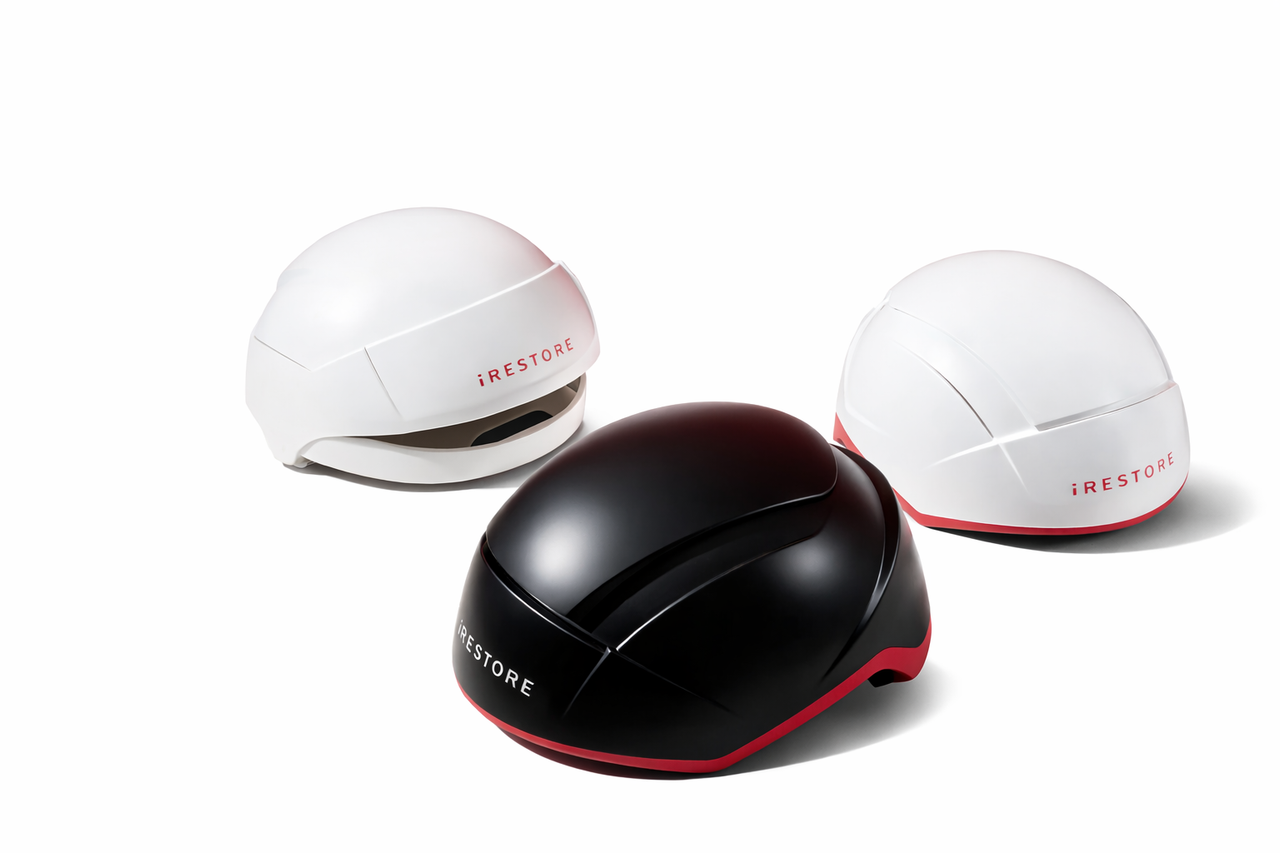
Choose your best iRestore
Advanced, clinic-grade red light therapy for faster, fuller hair regrowth at home.
Essential
Start with Essential
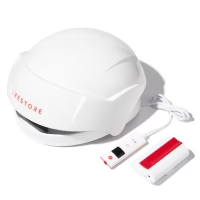
- +$300 Savings
- Thickens naturally
- 2-Year Warranty

Total: $799 $499
FREE SHIPPING
Elite
Choose Elite for Maximum Results
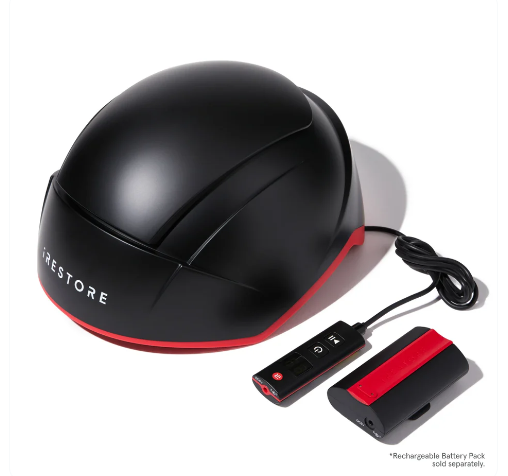
- $+800 Savings
- BIGGEST DISCOUNT!
- Stops hereditary hair loss
- 3-Year Warranty
Total: $2699 $1899
FREE SHIPPING
Professional
Go with Professional
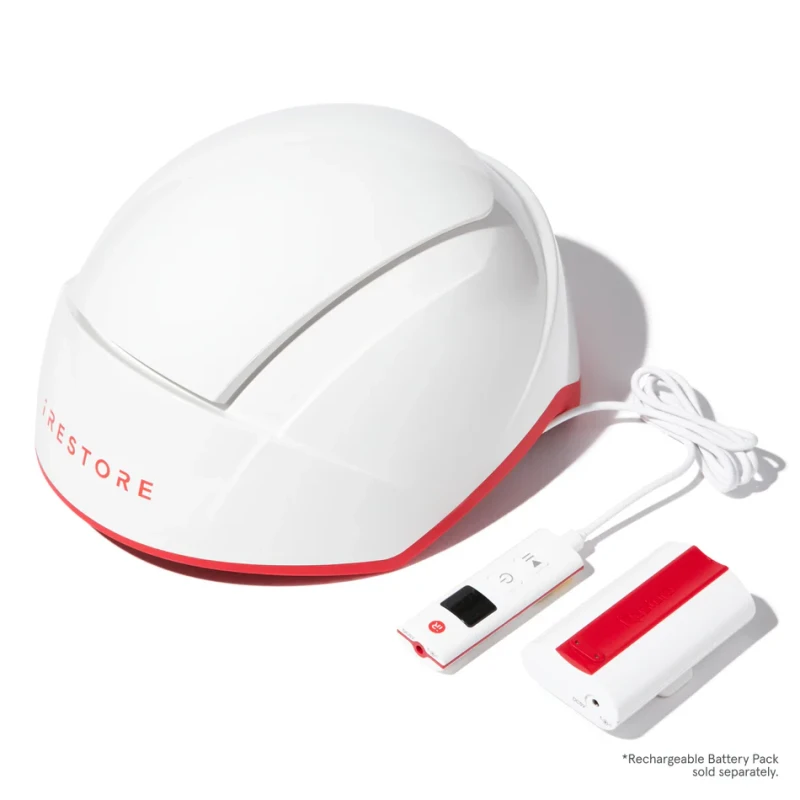
- $+600 Savings
- Increases hair density
- 2-Year Warranty
Total: $1499 $899
FREE SHIPPING
100% Money-Back Guarantee. Risk-Free 12-Months Return Policy
12-Month Money Back Guarantee*
We know hair growth takes time. If you don’t see results after 12 months, send it back for a refund.*
"“I could not believe the changes I was seeing! I consistently used the iRESTORE for 3 months and now my hair is fuller than ever!”"

"“Lots of growth around my temples after consistent usage!
Impressed by the effectiveness of the iRESTORE!”"

"I’ve tried all kinds of products, but iRESTORE finally worked!
Extremely happy with the results so far!"